

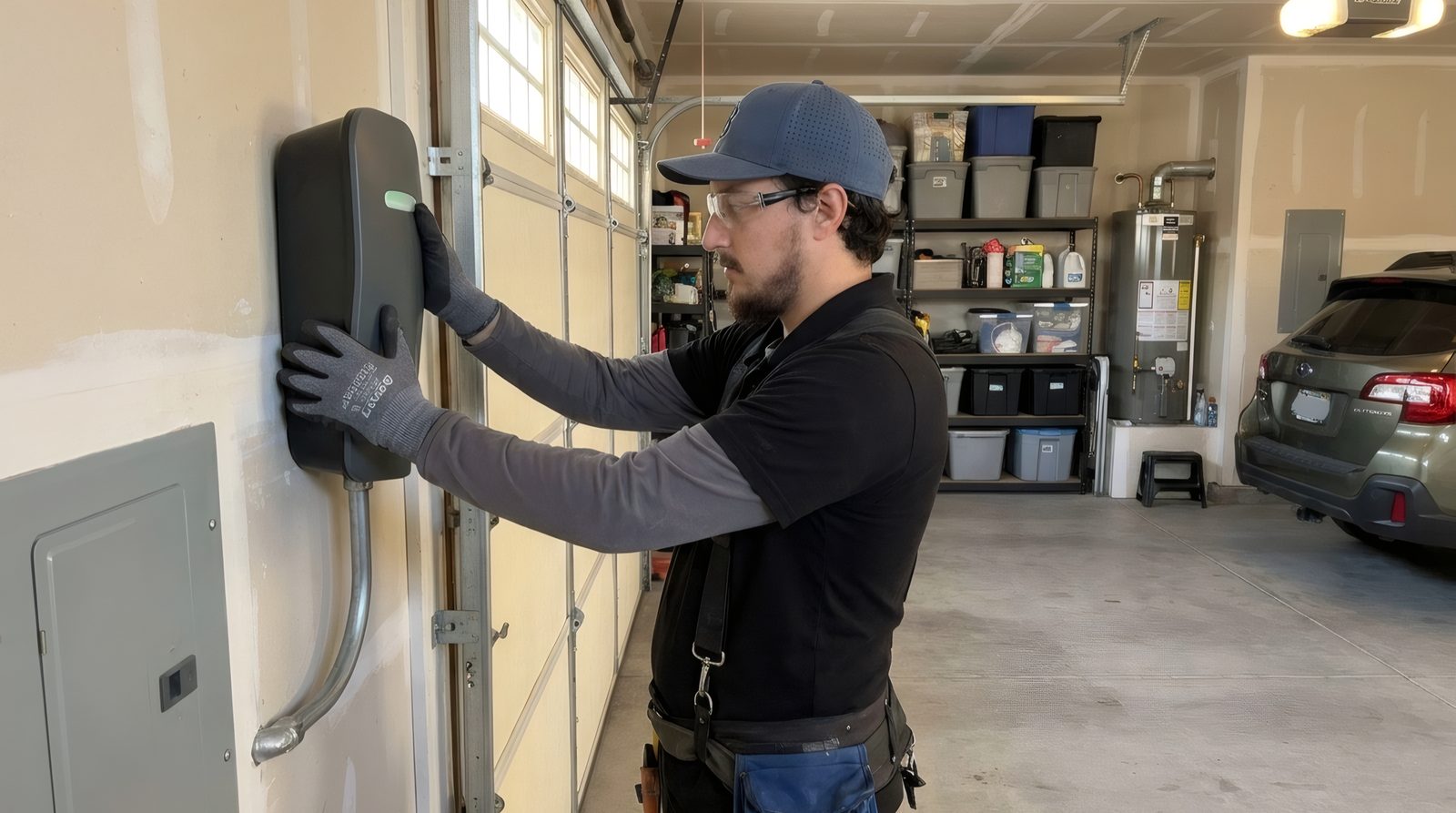
Shopping for an EV charger can feel more complicated than shopping for the car. You'll run into terms like Level 2, NEMA 14-50, J1772, NACS, hardwired, and 48 amps — and it's not always obvious which of it actually matters for your home. The good news: for most homeowners, the decision comes down to a handful of clear questions. Here's a plain-English tour of the charger types and a simple way to land on the right one.
The three charging levels
Every EV charger falls into one of three categories, defined by how much power they deliver.
Level 1 is the cord that comes in the trunk. It plugs into a standard 120-volt household outlet and delivers about 1.4–2.4 kW — roughly 3 to 5 miles of range per hour. That's enough to fully recharge a plug-in hybrid overnight, but a full battery-electric vehicle can take 40+ hours to fill from empty. Level 1 works if you drive very few miles a day and have nowhere else to plug in, but most EV owners quickly outgrow it.
Level 2 is what the overwhelming majority of homeowners actually want. It runs on a 240-volt circuit (the same kind that powers an electric dryer or oven) and delivers roughly 7–11.5 kW, adding about 25–44 miles of range per hour. That means a full overnight charge with plenty of headroom. When people say "home charger," this is almost always what they mean.
DC fast charging is the 50–350 kW technology you see at highway charging stations. It converts power to DC right at the unit and can refill a battery to 80% in 20–60 minutes. It's fantastic for road trips — but it requires industrial-grade electrical service and costs tens of thousands of dollars, so it is not a residential product. For home, your real choice is between Level 1 and Level 2, and Level 2 wins for nearly everyone.
| Level 1 | Level 2 | DC fast | |
|---|---|---|---|
| Power | 1.4–2.4 kW | 7–11.5 kW | 50–350 kW |
| Range / hour | ~3–5 miles | ~25–44 miles | ~150–1,000 miles |
| Plug | Standard outlet | 240V circuit | Commercial service |
| Best for | PHEVs, light use | Everyday home use | Highway / public |
Plug-in vs. hardwired
Once you've settled on Level 2, the next fork is how it connects to your home.
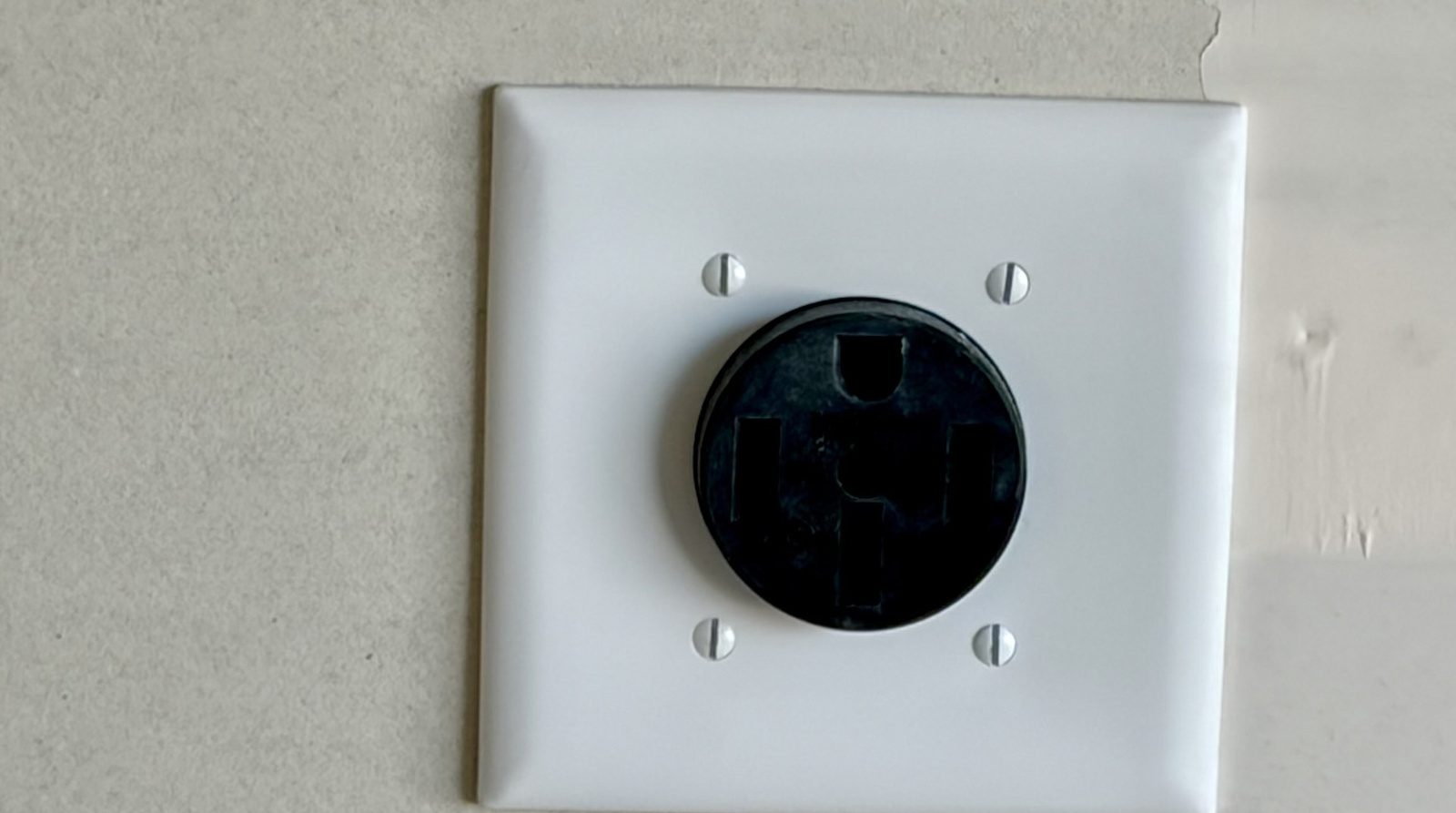
- Plug-in chargers use a NEMA 14-50 outlet — the same style as many electric ranges. An electrician installs the outlet, and you plug the unit in yourself. Under electrical code, plug-in units top out around 40 amps (about 9.6 kW, or ~30–37 miles per hour). The upside: it's easy to unplug and take with you if you move.
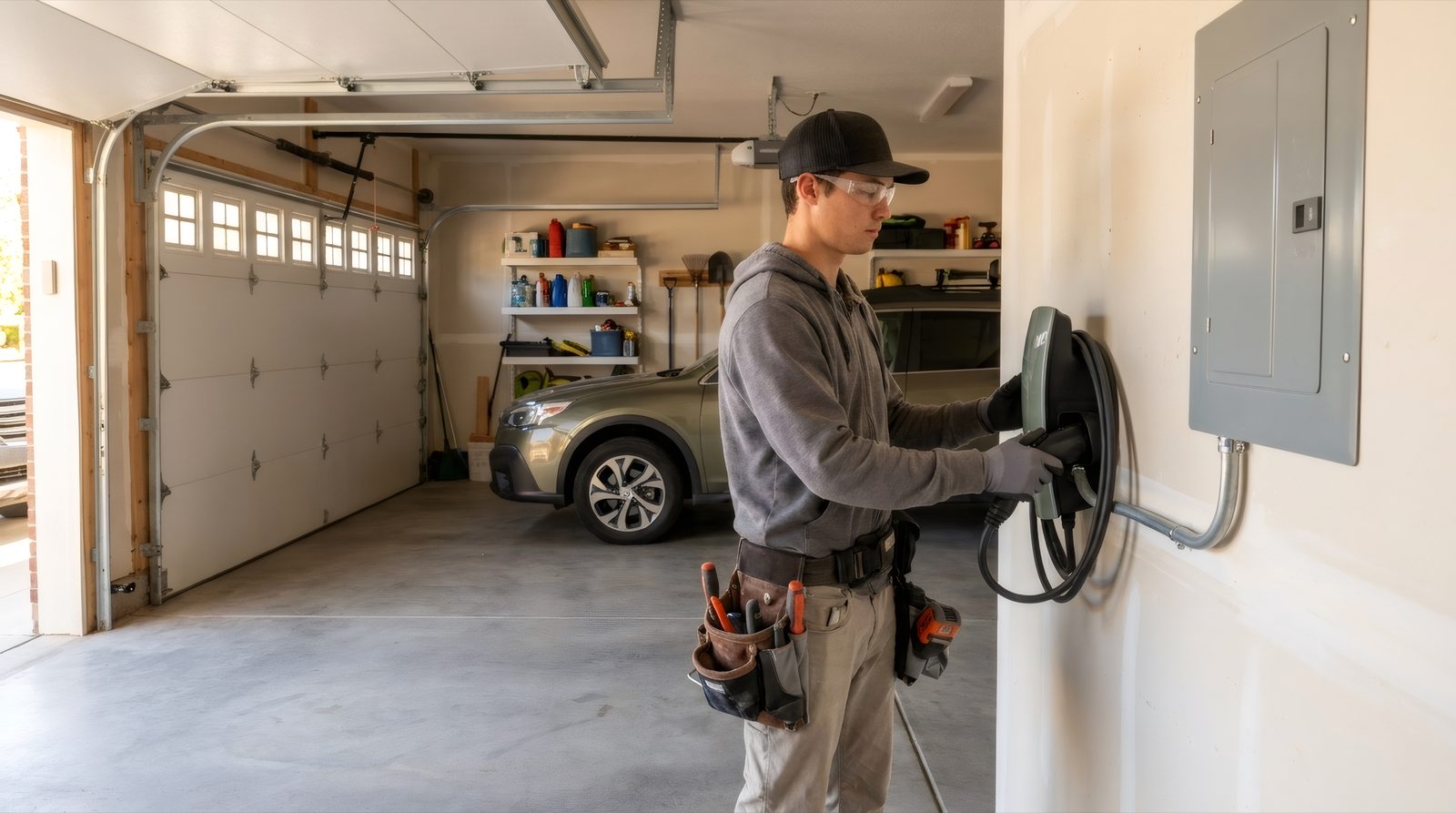
- Hardwired chargers connect directly to your breaker panel with no outlet in between. That lets them run at up to 48 amps (about 11.5 kW, or ~37–44 miles per hour) and, by removing the plug, reduces heat and is often recommended for outdoor installs. The trade-off is that it's a permanent fixture and requires a licensed electrician.
For most people the speed difference between 40 and 48 amps is minor — both easily refill a car overnight. Choose hardwired if you want the fastest home charging or an outdoor unit; choose plug-in for flexibility.
Getting the connector right
The plug that touches your car matters too, and this is where the last couple of years got interesting. For years the standard AC connector was J1772, used by nearly every non-Tesla EV. Tesla used its own connector, now standardized as NACS (North American Charging Standard). Beginning with 2025 model-year vehicles, Ford, GM, Hyundai, Kia, Rivian and others started switching over to NACS.
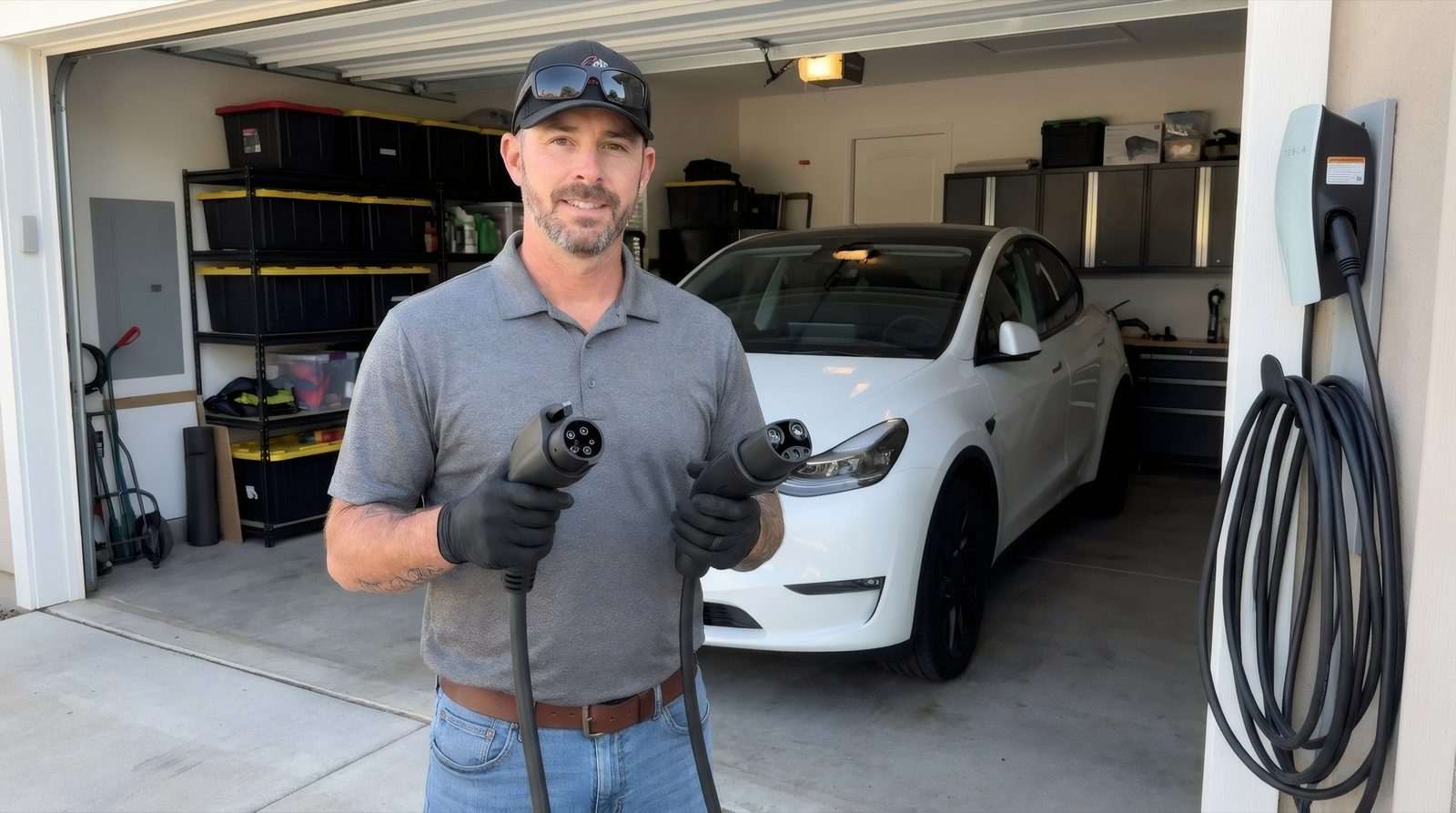
The practical takeaway: check what your car uses. A J1772 home charger works with almost any pre-2025 EV, and an adapter bridges the gap to NACS cars. Many chargers now ship with NACS connectors too. When in doubt, a J1772 unit plus the right adapter is the safe, universal choice — and it's worth confirming before you buy.
Installing outside? Look for a weatherproof rating
Not everyone has a garage, and the good news is that plenty of EV chargers are built to live outdoors — on an exterior wall, a carport post, or a pedestal in the driveway. The key is checking the unit's weatherproof rating before you buy, because not every charger is rated for the elements.
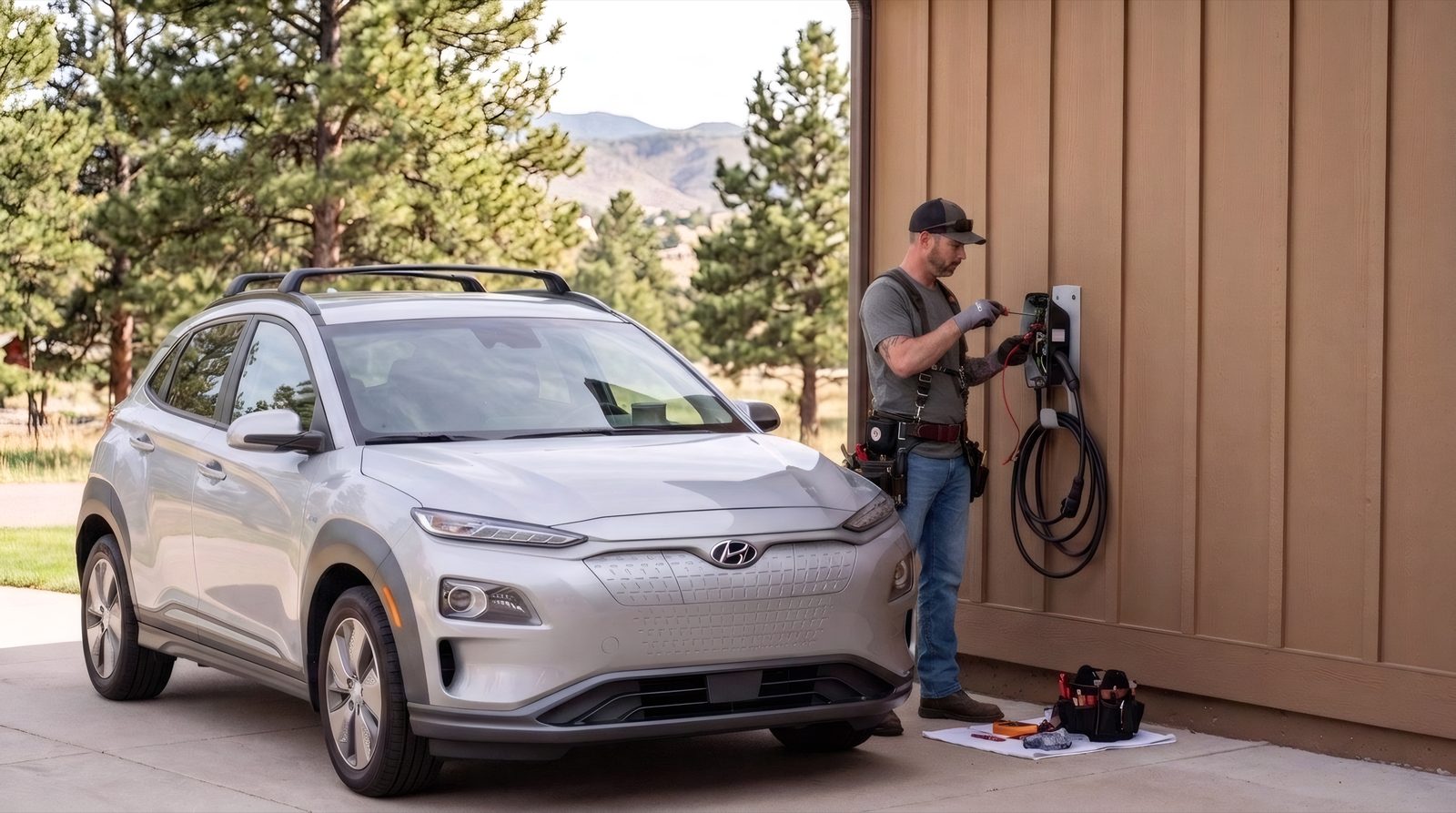
In North America, that rating is usually a NEMA number. NEMA 3R is the minimum for outdoor use and protects against rain, sleet, and ice. NEMA 4 goes further, adding protection from windblown dust, splashing water, and even a direct spray from a hose — which is why it's the recommendation for open driveways and anywhere the unit might catch direct rain or car-wash spray. Some manufacturers use the global IP system instead; look for IP66 or higher, which means fully dustproof and able to handle heavy rain and snow.
Two more things matter outdoors. First, temperature range — quality units operate from roughly -22°F to 122°F, and a charger pushed outside its rated window may throttle or refuse to start, so match it to your local climate. Second, the rating covers the charger enclosure, not the outlet. If you go the plug-in route outdoors, the NEMA 14-50 receptacle needs its own weatherproof "in-use" cover that stays sealed while the plug is inserted. For outdoor installs, many electricians favor a hardwired unit precisely because it removes that exposed plug altogether.
Do you need "smart" features?
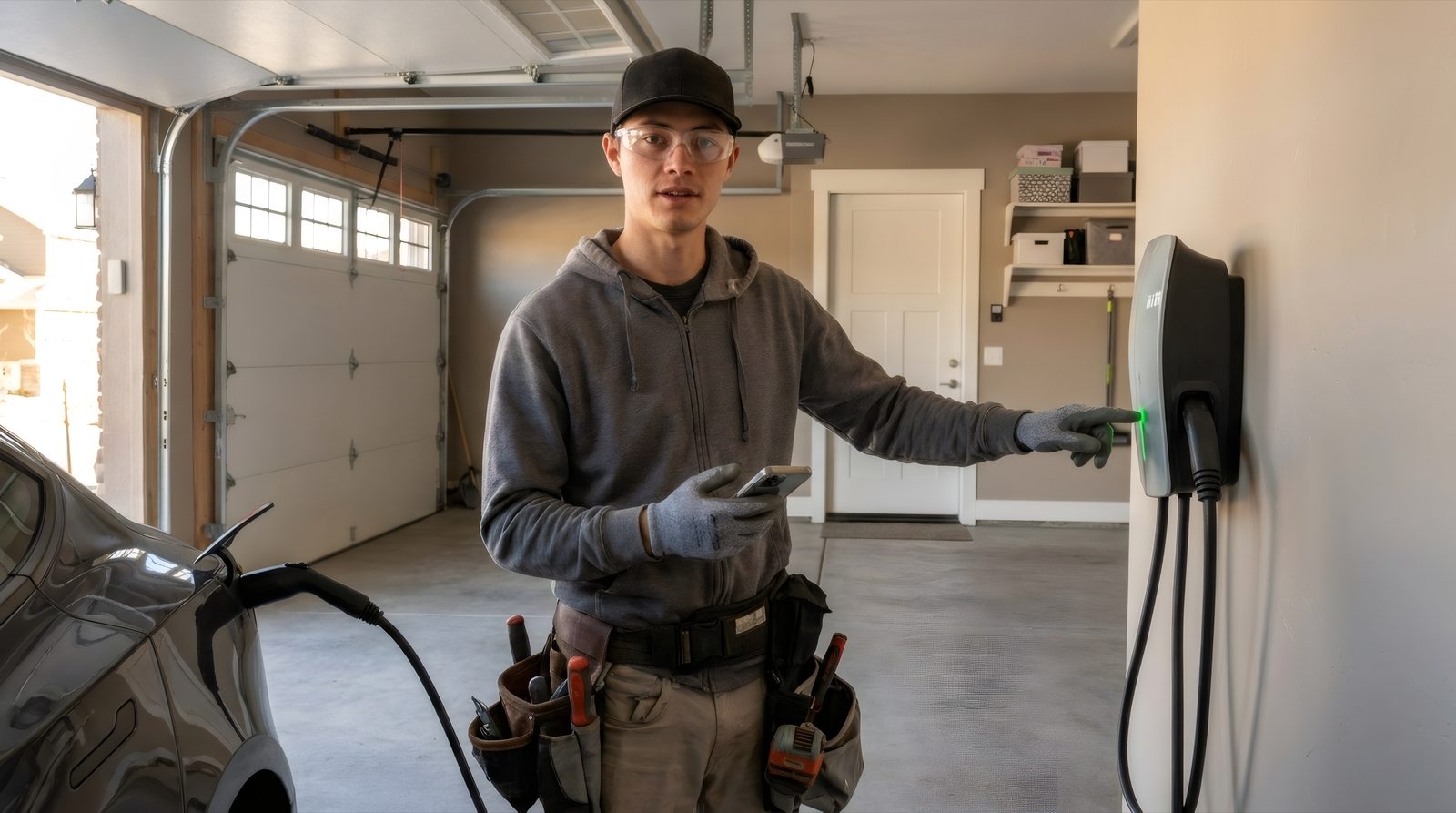
Smart (Wi-Fi-connected) chargers let you schedule charging for cheap overnight electricity rates, track energy use, and control the unit from an app. If your utility offers time-of-use pricing, that scheduling can pay for itself. Basic "dumb" chargers cost less and are perfectly reliable — many EVs can schedule charging from the car itself, so you may not need the charger to be smart at all. Decide based on whether you'll actually use the features.
How to decide, in five questions
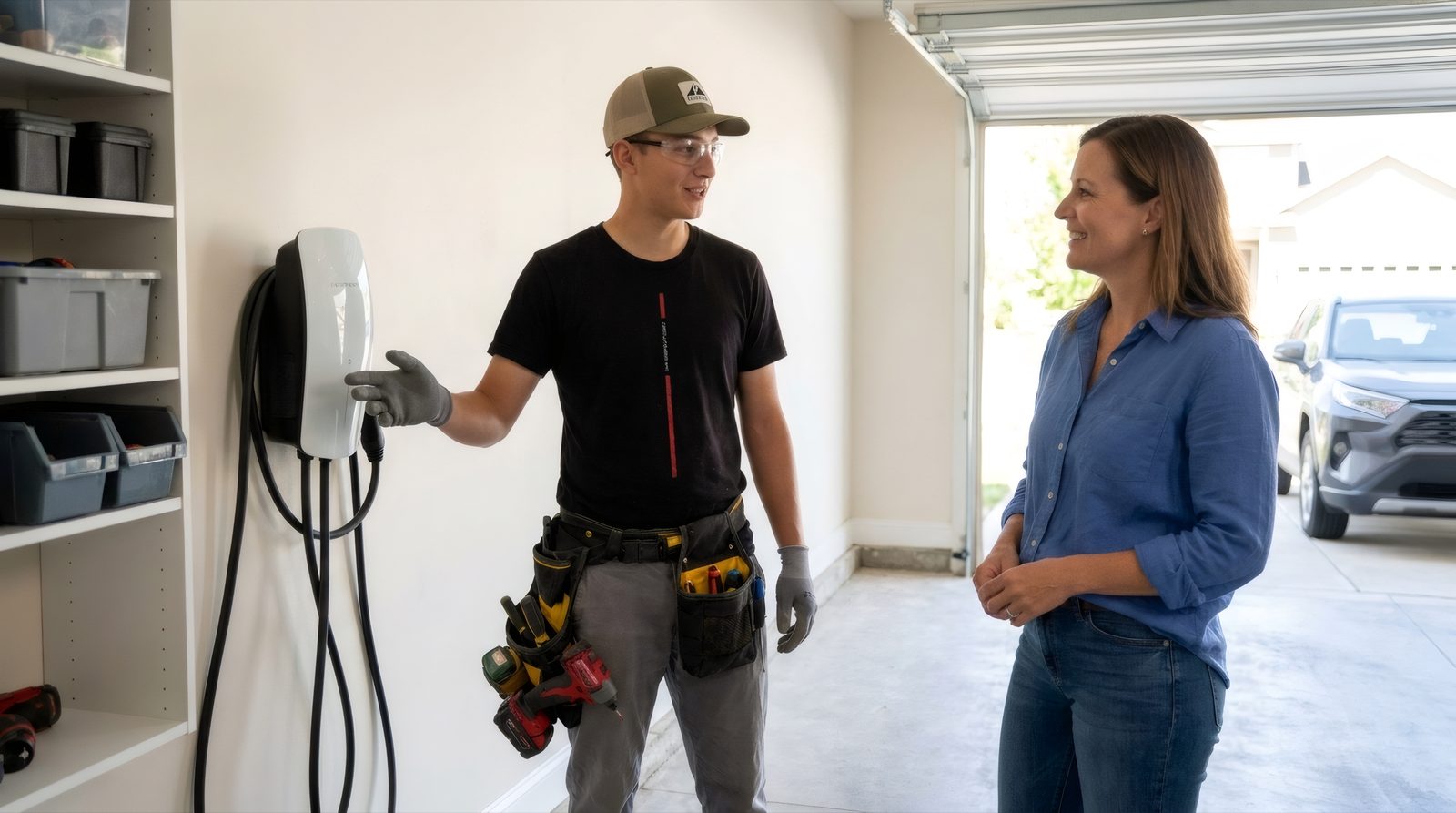
- How far do you drive daily? Under ~30 miles with a plug-in hybrid, Level 1 may suffice. A full EV with normal commuting means Level 2.
- How fast do you need to refill? Overnight is plenty for most; if you want maximum speed or share one charger across two EVs, lean toward 48-amp hardwired.
- Plug-in or permanent? Renting or expecting to move soon favors a plug-in unit; a forever home favors hardwired.
- What connector does your car use? Match J1772 or NACS, or plan for an adapter.
- Does your panel have room? A Level 2 circuit draws real power. Older homes sometimes need a panel assessment or upgrade first — the single most important thing to check before buying anything.
The part that's easy to overlook
Whichever charger you pick, it's only as good as the wiring and panel behind it. The most common surprise homeowners hit isn't the charger — it's discovering their electrical panel doesn't have the capacity to add a 240-volt circuit safely. That's exactly the piece Hi Power handles: assessing your home's electrical system, sizing the circuit correctly, and installing it so your charger runs safely today and you've got room for whatever you electrify next.
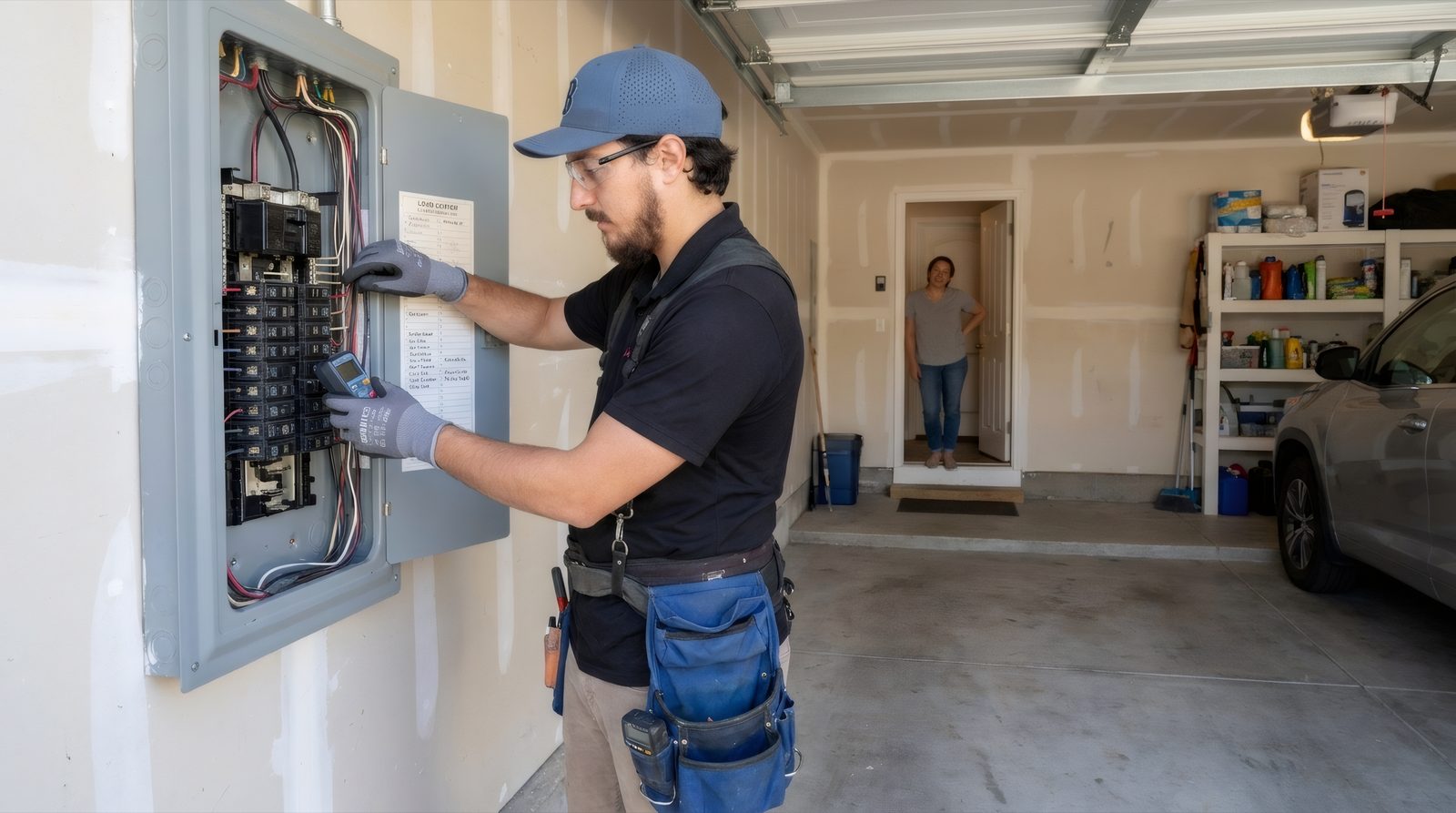
For nearly every home, a Level 2 charger is the right call. Decide plug-in vs. hardwired on flexibility and whether you're installing outdoors, match your car's connector, and — before anything else — make sure your panel can handle the new circuit.
- U.S. Dept. of Transportation — Charger types and speeds
- U.S. EPA — Plug-in EV charging details
- EnergySage — Level 2 charger amperage guide
- Emporia Energy — J1772 vs. NACS connectors
- EnergySage — Should you install an outdoor EV charger?
- FLO — Outdoor home EV charger enclosure ratings decoded
