

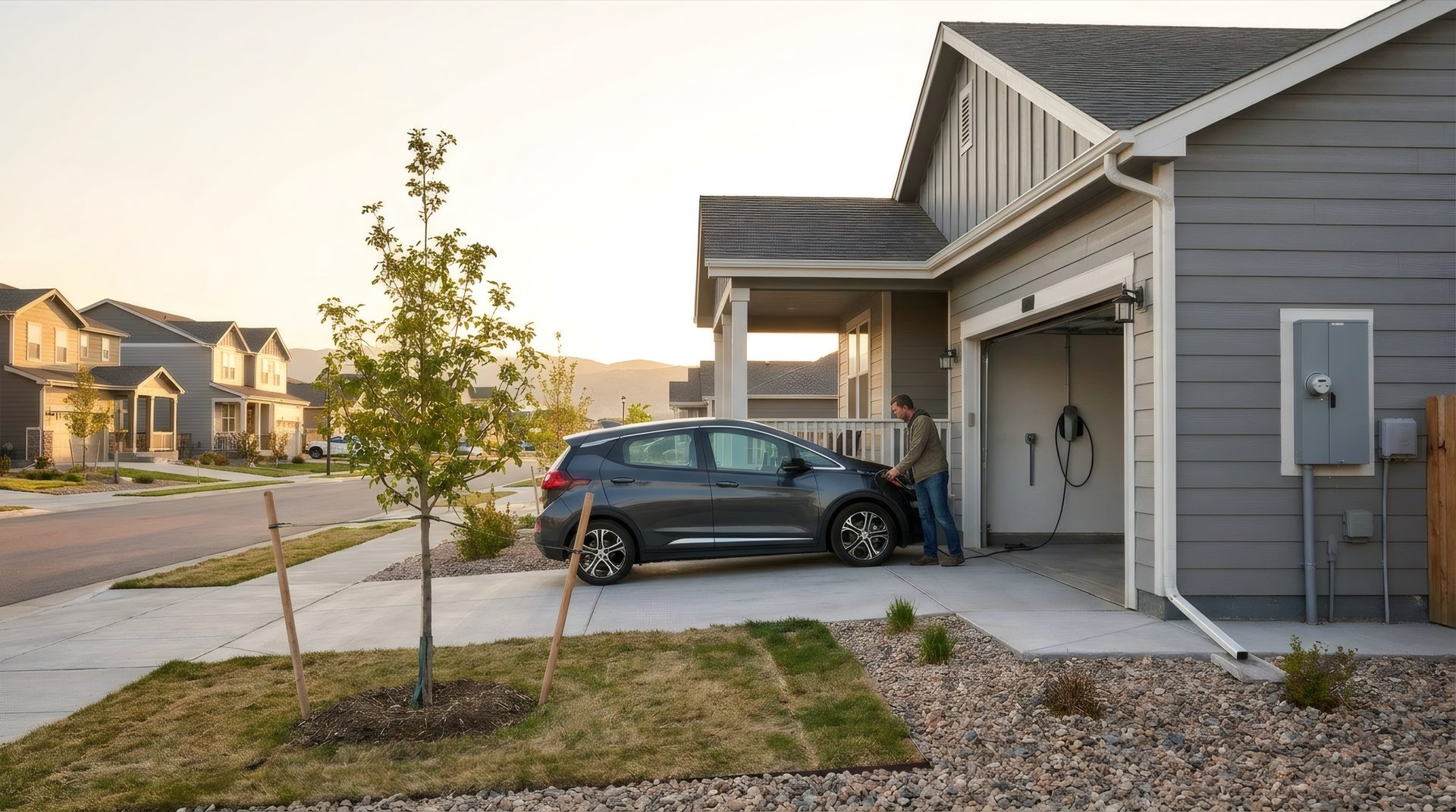
If you just bought an electric vehicle — or you're about to — one of the first questions you'll face is deceptively simple: where are you going to charge it? The public network has grown a lot, and it's easy to assume you'll just "plug in wherever." But for the vast majority of homeowners, the smarter move is to charge at home. Here's why a charger in your own garage beats a trip to the public station on nearly every measure that matters: cost, convenience, battery health, and long-term home value.
1. It's a lot cheaper
This is the big one. The average U.S. home pays about 17 cents per kilowatt-hour for electricity, while public charging averages roughly 37 cents per kWh across all charger types — and DC fast chargers can run 53 cents per kWh or more. In other words, public charging often costs two to three times as much as charging at home for the exact same energy.
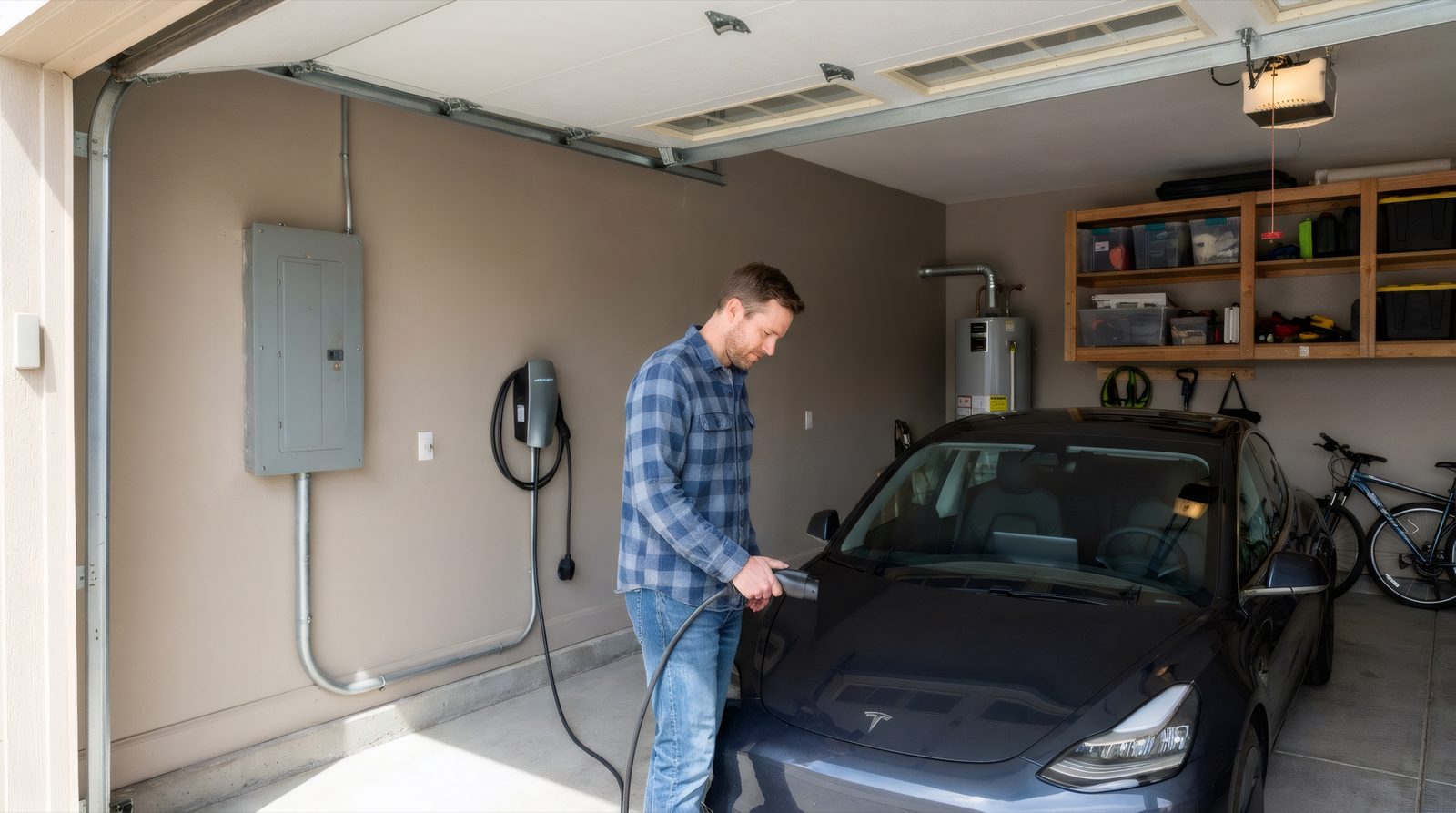
Put that in real terms. Topping up a 72 kWh battery costs around $13 at home, roughly $18 at a public Level 2 station, and close to $38 at a DC fast charger. If you drive 12,000 miles a year, charging at home instead of relying on fast chargers can easily save you hundreds of dollars annually — money that pays back the cost of a home charger surprisingly fast.
Filling a 72 kWh battery: ~$13 at home · ~$18 at a public Level 2 station · ~$38 at a DC fast charger.
2. It's always ready — no waiting, no broken plugs
Charging at home means you never wait in a line, never circle a parking lot looking for an open stall, and never discover the one charger you drove to is out of order. That last problem is more common than you'd think. Recent industry studies found that roughly 14–16% of public charging attempts fail, and the single biggest reason is a charger that's simply out of service. One large analysis of real charging sessions found that nearly a third of attempts don't go smoothly.
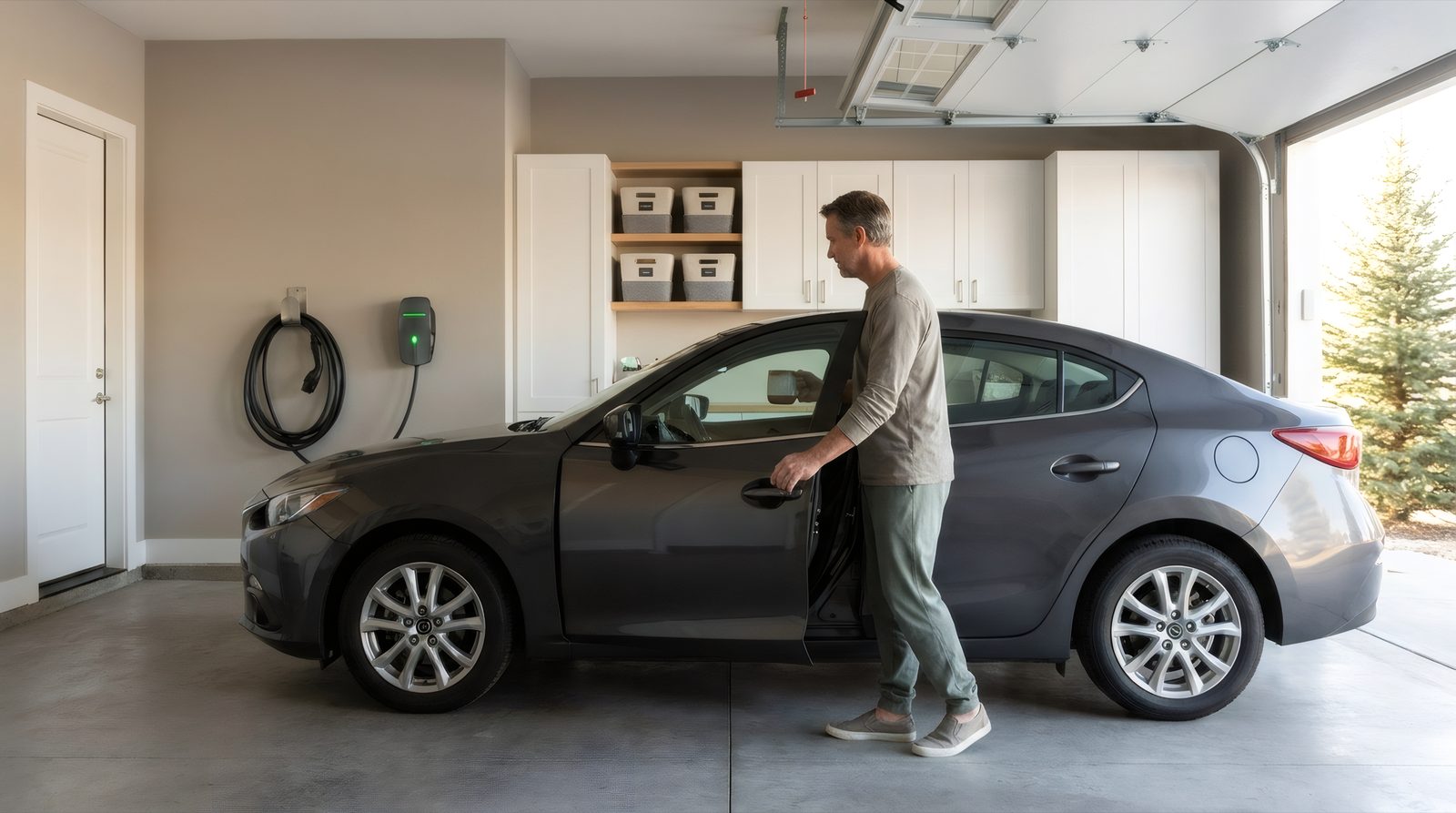
At home, none of that is your problem. You plug in when you park, and you wake up to a full battery every morning. A Level 2 home charger adds roughly 25–40 miles of range per hour, so an overnight charge easily covers a typical day of driving.
3. It's gentler on your battery
Fast is not always better. DC fast charging pushes a lot of energy into the battery quickly, which generates heat and, done repeatedly, can accelerate long-term battery wear. Slower Level 2 charging at home is easier on the pack. Because you're charging overnight, you also have the flexibility to keep your battery in its healthiest range — many drivers set a limit around 80% for daily use and only charge to 100% before a long trip. That kind of gentle, scheduled charging is hard to pull off when you depend on public stations.
4. It adds value to your home
A dedicated EV charging circuit is quickly becoming a feature buyers look for, the same way they look for a modern kitchen or central air. Installing one isn't just a convenience for today — it's an upgrade to your home's electrical system that pays off when it's time to sell. As more of the neighborhood goes electric, a home that's already wired for EV charging stands out.
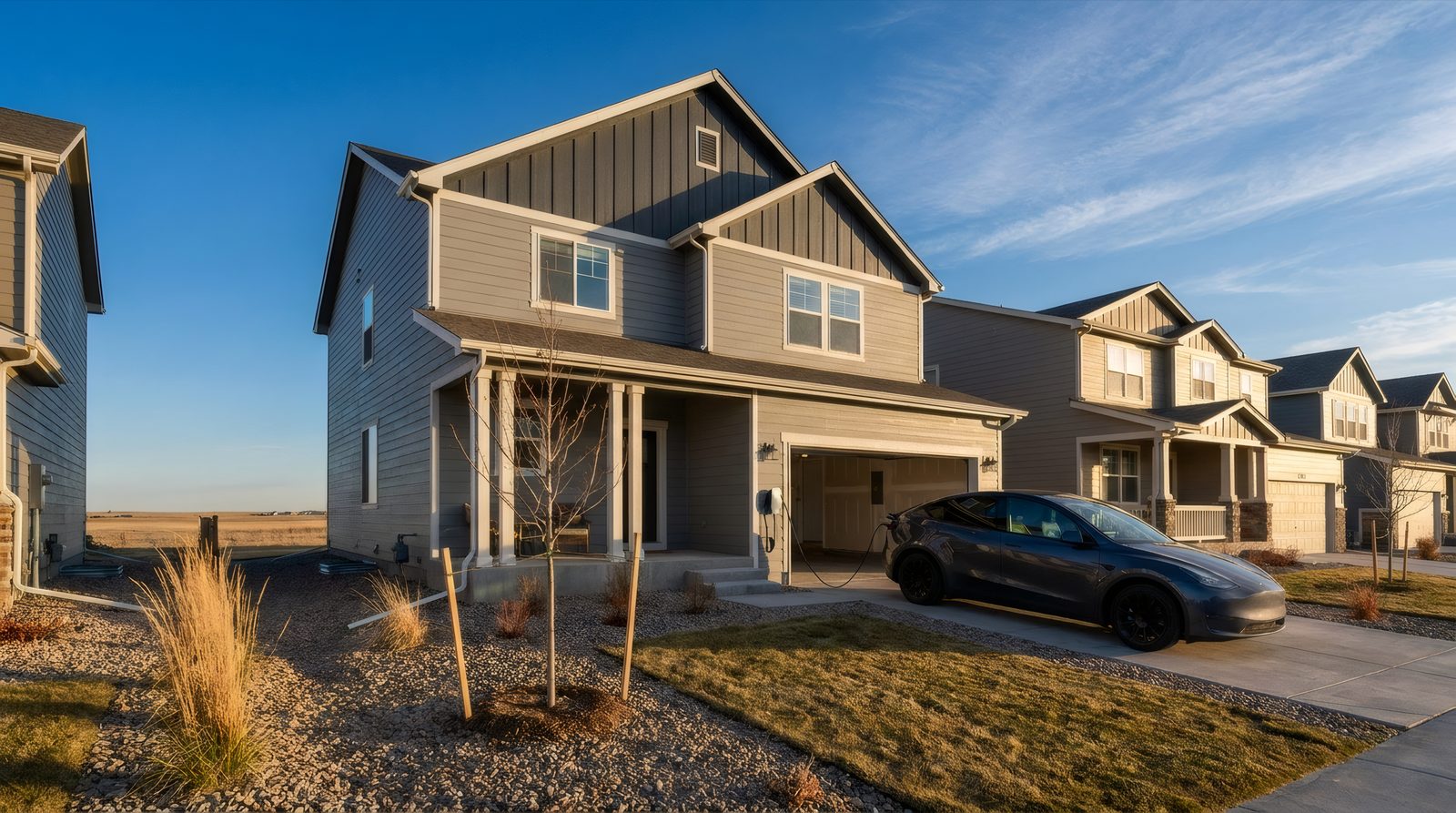
This is where thinking beyond a single gadget pays off. A charger is only as good as the wiring behind it. Getting the electrical foundation right — adequate panel capacity, a properly sized 240-volt circuit, and room to grow — means your home is ready not just for today's car but for the next one, plus a heat pump, induction range, or battery backup down the road.
5. What it actually takes to set up
Setting up home charging is more straightforward than most people expect. In broad strokes, it comes down to three things:
- A Level 2 charger. The wall-mounted unit that runs on 240 volts (the same type of circuit as an electric dryer) and charges several times faster than a standard wall outlet.
- A 240-volt circuit. An electrician runs a dedicated circuit from your panel to where you park.
- Enough panel capacity. Older homes sometimes need a panel assessment or upgrade to add the load safely — exactly the kind of thing worth checking before you buy the charger, not after.
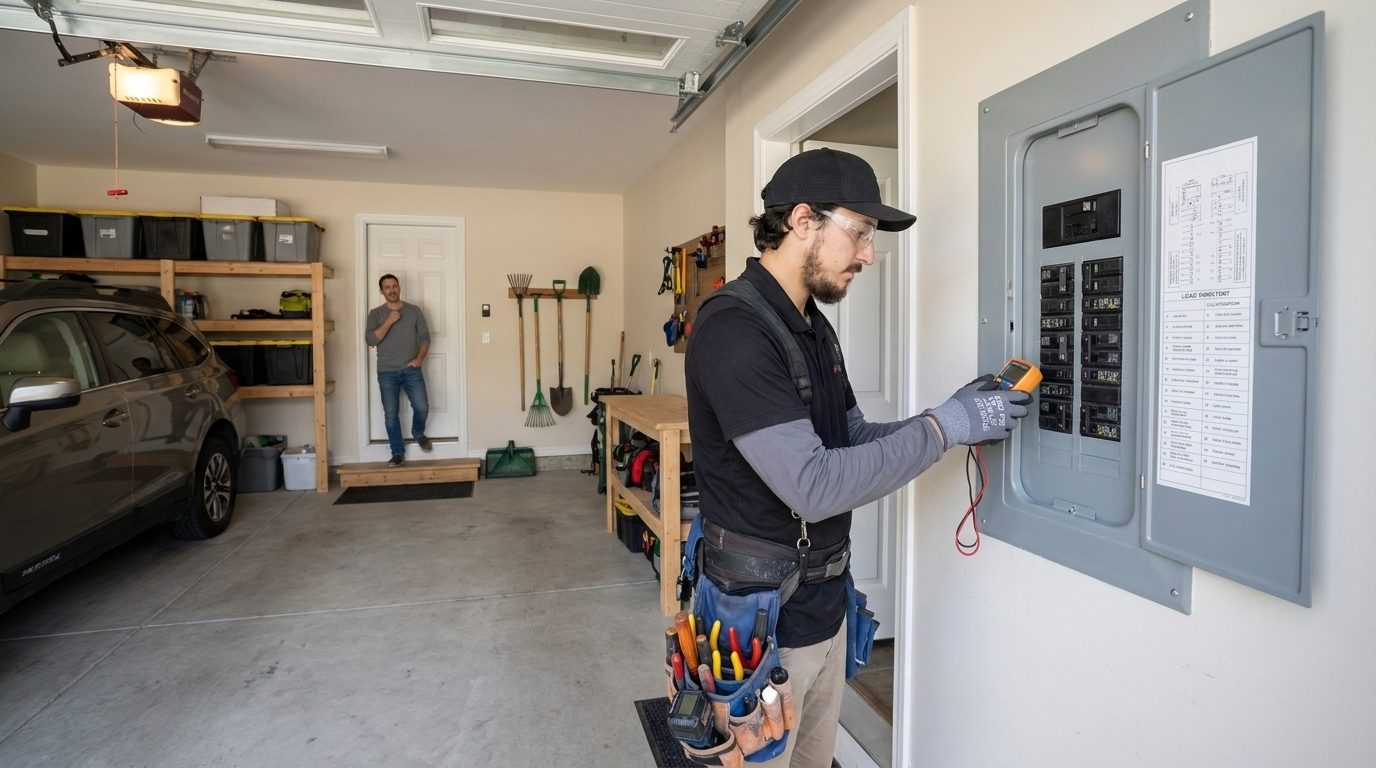
For most single-family homes with off-street parking, the whole job is a one-day install. The key is doing it right the first time with a professional who looks at your whole electrical picture, not just the outlet.
When public charging still makes sense
To be fair, public charging isn't going anywhere, and it shouldn't. It's essential on road trips, when you're away from home, or if you live in an apartment without a dedicated parking spot. The public network is the backbone of long-distance EV travel.
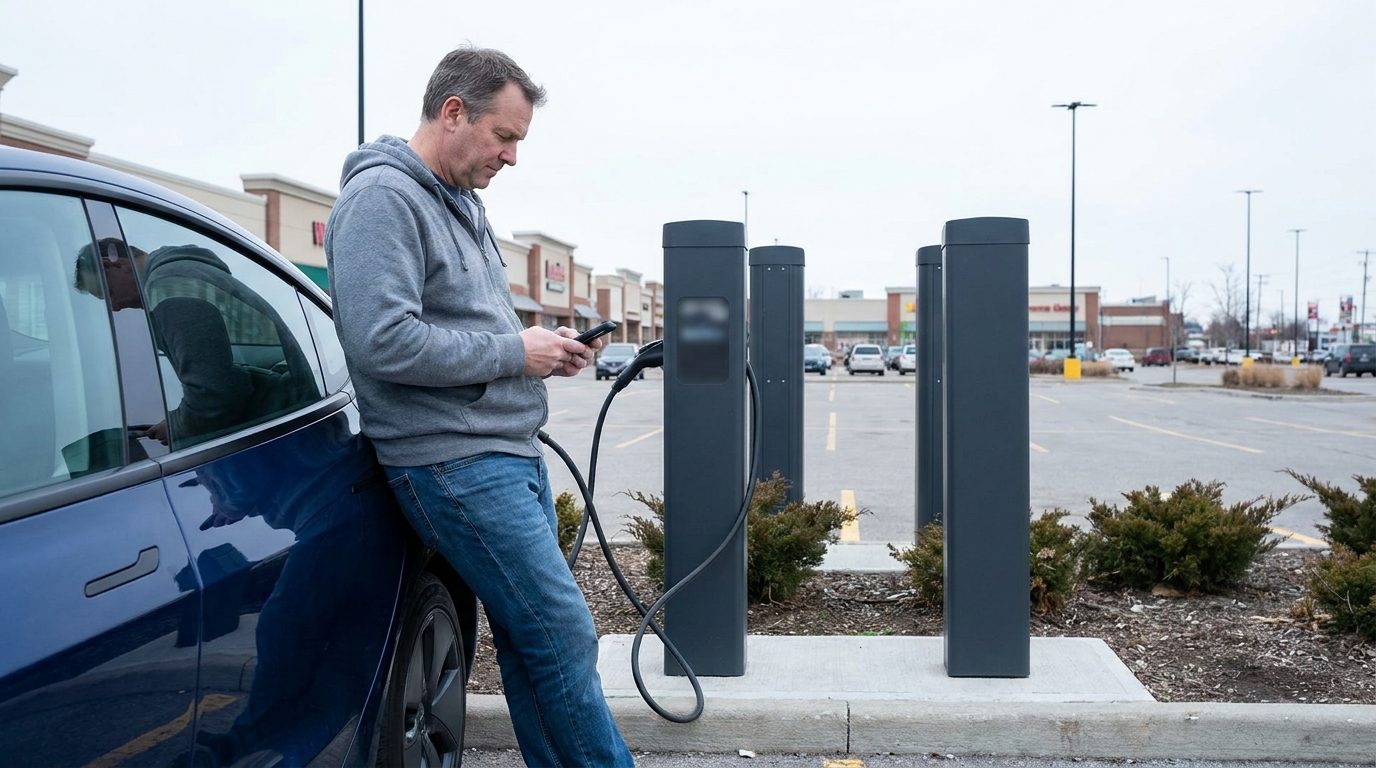
The point isn't that public charging is bad — it's that it works best as a supplement to home charging, not a replacement for it. Lean on your driveway for the daily 90% and use public chargers for the occasional long haul.
The bottom line
For everyday driving, charging at home wins on cost, convenience, and battery health — and it quietly boosts your home's value along the way. The one thing worth getting right is the wiring underneath it all. That's the part Hi Power exists to handle: making sure your home's electrical system is ready for an EV charger today and whatever you plug in next.
- EnergySage — EV home charging vs. public charging
- Kelley Blue Book — How much does it cost to charge an EV?
- J.D. Power — 2025 U.S. EV Experience Public Charging Study
- ChargerHelp — Charge success rate report (2025)
